Thursday, August 11, 2016

Away


You may have noticed, if you have been poking around my Etsy shop, that I am away from my studio this month. My banner has an announcement about being away and my processing time for shipping orders has been changed to a couple of weeks. Although I am fitting in some fun during this time, the month of August is hardly summer vacation for me. This time away is all business.

I am lucky enough - or unfortunate enough, depending on your perspective - to live in a town that is heavy on summer tourism. Very, very heavy. Saratoga Springs is known for its healing springs and the water that bubbles forth, but even more so for the horse racing that triples the population of my little upstate New York town every summer.

For hotels, restaurants and shops, this population boom pours money into our local economy. But you can't increase from a population of 30,000 to 100,000 and have enough beds for every visitor. That's where the cottage industry takes over. And by cottage industry, I mean not only cottages, but houses, condos, apartments, lofts and any other dwelling that can be rented out during this equine explosion to the people willing to pay absurd amounts of money to stay in Saratoga in the summer.

Renting my house out for four weeks every August has become a natural rhythm to my year. The dance begins in June when I walk around my house and take a look at it through a stranger's eye. The upstairs hallway needs to be re-painted; the central air conditioning should be serviced; the front porch has a column that has some rot. Then I call my handy dandy contractor and start scheduling. The Fourth of July means it is time to tackle the basement. When I first started renting, I would carefully assign a way to get rid of the flotsam: old toys would go to friends who had younger children; I could salvage something else with a little paint or with some repair work; unwanted books were collected and donated to the library; good things we no longer wanted could be sold at a yard sale or on Craigslist. It took more planning and running around than I have the patience for 12 years later. Now I just pick a sunny Saturday and put unwanted stuff out on the sidewalk with a "free" sign and pitch whatever is leftover at the end of the day. Done.

A clean basement means I can start packing up things here and there, putting them in containers and bringing them down. Renters expect that a house will be depersonalized and look much like a B&B, but with the convenience of home. (I leave my fridge full of condiments, salad dressings and even leave behind eggs, butter, milk and cheese. Who wants to rent a house and then have to go buy all kinds of little foo stuffs? I leave the basics of salt, pepper, jelly, ketchup, mustard and, in the case of my fridge, anchovy paste, chili paste with garlic, Better Than Bouillon and soy sauce.)

By the middle of July, I have worked through most of the house and am very happy with all the excess stuff that is out of my life. I hit the clothes closets and start by packing up the winter stuff that I won't be wearing until fall and end with summer stuff currently in my wardrobe rotation. I eventually touch every article of clothing that I own and we all purge a surprising amount so that we don't end up storing things we will get rid of when we unpack.

The next step is a deep cleaning. I used to do this one by myself and I am a rabid deep cleaner. I figure if I am going to clean something once a year, then I am going to use a toothpick to get in all the tiny places and really clean it. But, again, after renting for more than a decade, I have learned to be smarter. I now hire two women to come for half a day. We all clean top to bottom, and it's done all at once so nothing has time to get dirty again.

The last stop is my studio. I wait until the morning that I am moving out to change the shipping times, then I put any of our remaining personal items in, lock it up and get the heck out of Dodge. I consider renting a part-time seasonal job because of the hours I put in getting the house all ready.

But lest you think I take time off while renting, I am fitting in some work here and there. Nobody can take a month off when they own their own business. I have been staying with family in another state, where I have been looking at new places at which to wholesale my Petal People cards. I am researching possible venues that match my criteria, visiting shops to check out the look and feel of the place and its customers, collecting business cards, and making mental notes about display ideas so I have a good list and am all ready when I send out my wholesale inquiries early in 2017 for the spring gardening season. Oh and I am also raiding everyone's gardens for flowers to press for new designs to create this winter when everything is quietly sleeping under a blanket of snow.

I thank the customers who are still purchasing out of my shop with long processing times for being so patient and understanding while I am away. I will be back soon!


Monday, August 8, 2016

Map art


I love maps. I have an entire wall in one room of my home covered in maps of all the places my family and I have been. There's a world map, maps of of city streets, maps of state and national parks. I have framed maps, maps that I made into handmade books, and books of maps. I even had an artist create a custom map-like papercut for me. (The different colors indicate water depth.) It's the body of water where I spent my childhood and most of my life as a young adult.


So when I came across Matt Cusick's map art, I was smitten. If you can't tell, the pictures that he makes are made entirely from little pieces of maps. It looks like he cuts shapes along coastlines to create the jagged lines of some of the areas of the wave. Since my favorites colors are the blues and greens that you see in the ocean, I am drawn to his artwork that features waves and water. And, of course, since this art is made of paper, I think it's the coolest thing.


I would love to see one up close. How magical and creative. Makes me want to get some old maps and make something! To see more, check out his website: http://www.mattcusick.com/paintings-collage

Friday, August 5, 2016

Iceland travel tips


Sometimes I can only blog about the narrow focus of handmade paper and my pressed flower art card business for so long. The truth is, there are a lot of areas of life that are inspirational and influence my work that I never talk about. Here's one of them: vacation. Travel has deeply influenced my work, whether it is something about the colors or landscape that I see, work that I come across at an artsy shop on my travels that give me an idea, or the opportunity to walk away from my business completely and then return with fresh eyes examining ideas started before a trip.

It's a long, roundabout story about how we ended up taking a trip to Iceland instead of a different destination. I won't bore you with the details except to say that it started as a trip somewhere else with a stopover in Iceland on the way. (Icelandic Air allows passengers to book trips with stops in Iceland for up to seven days with no additional charge. It's a great way to add a little oomph to your trip and get a twofer vacation.) But the more we starting researching Iceland, the more we were intrigued and wanted to spend more time there.

I gathered so many great travel tips from friends and family who had preceded me. I thought I would share these tips because they are unique to Iceland. It is becoming such a hot destination that I hope somebody out there is googling travel tips for Iceland and stumbles across my blog for a little help.

There are many ways to see Iceland and many areas with varied weather, landscape and activities. We saw tour busses, bicyclists, campers and hitchhikers all over the country but we chose to rent a car and strike out, traveling around the entire country on the Ring Road. No matter how you figure it out, these tips will make your trip much better.

PACK YOUR OWN TOWEL. There are geothermal "hot pots" all over Iceland. These are hot little swimming holes that take the form of public swimming pools, expensive spas and even rustic swimming holes that are a 20-minute hike off a road. If you have your own towel you can save the the expensive rental costs of towels at places like the Blue Lagoon, or you can use your towel when you are out in the middle of nowhere and discover a good place to take a dip.


BRING AN EMPTY WATER BOTTLE. Iceland's tap water is delicious. In many places, you will smell sulfur in the hot water because it is heated using the country's efficient, eco-friendly geothermal heat. But if you run the water on cold, you will find crystal clear water and never have to pay for a bottle of expensive water.


RENT A 4X4. Many of the famous sites in Iceland - like roaring waterfalls and spouting volcanic geysers - are just a few steps from a main road. But if you have a 4x4, you can take the less traveled gravel roads and discover intriguing, less visited sites that have fewer people.

EAT HOT DOGS. Hot dogs are inexpensive in a country of very expensive food. But don't eat them to go easy on your wallet. Eat them because they are delicious. My mouth is watering thinking of the wieners I ate from food trucks, gas stations and restaurants across Iceland. What makes them so good? They have a natural casing, which gives them a satisfying snap when you bite into them. But unlike American hot dogs, they are made mostly from Icelandic lamb, along with pork and beef. This is organic, free range, grass fed, hormone free Icelandic lamb, and you can taste the quality. I am a strictly-ketchup-on-my-hot-dog person but I was glad I branched out and tried them the way Icelanders eat them with raw white onions and crispy fried onions, ketchup, sweet brown mustard called pylsusinnep, and remoulade, a sauce made with mayo, capers, mustard, and herbs. They stuff all of the fixins into the bun under the hot dog and garnish it with mustard. *Sigh*


BRING WATERPROOF RAIN PANTS, BOOTS & A JACKET. The weather is unpredictable. Whether it is windy or rainy, this clothing will keep you comfortable and dry. If you want to get close to waterfalls - and there are so many waterfalls that you will stop looking at them because you have seen so many (notice the waterfall in the background of the hot dog picture?!) - you will get soaked without waterproof clothing.


GO A LITTLE FARTHER. We saw many people jump out of their cars, see the obvious sight and then leave. But if you explore a little farther, you will see so many wonderful things. For instance, we went to this amazing waterfall where you can walk behind it and feel the spray on your face:


It was stunning and we loved it. We would have been thrilled if we got in our car and left. But instead of going back to the parking lot, we followed a paved path down until we saw this sign to another waterfall that we couldn't see from the road or the parking lot:


There was a break in the rocks and we had to walk in a river (remember those waterproof boots?) to get into the base of the waterfall, but then we came to it:


At the Glacial Lagoon, we took in all the cool icebergs floating around the lagoon and looked at the tongue of the glacier coming down from the Highlands. Amazing.


But if you leave the crowds follow the icebergs downstream to the ocean, you can see seals playing in the water and escape the crowds of the lagoon (as well as the noise of the boats doing tours of the area.)

If you have any additional travel tips, let me know. I enjoyed Iceland so much, I would go back again. Happy travels!

Monday, August 1, 2016

The psychology of price


Why is it that whenever I raise my prices, I get more business on the same exact items that are now more expensive? There is some psychological phenomenon that must have a name or a published study that I would like to know about. I have seen this happen many times over the years. When I first started making my greeting cards with handmade paper and pressed flowers, I wasn't that confident about selling them and I was doing it more to clean out of inventory than anything else. I remember I started selling them for $1 each. I got a few customers who saw my inexperience and bought a lot then told me I should raise my prices. But many other people seem turned off by the price. If they were that cheap, why couldn't they be a little cheaper? Customers hemmed and hawed about buying them and wanted a discount off the very low price.

I gained confidence in my work and doubled my price, selling a lot more; when I raised them by another dollar, to triple the original price, and added packaging, I couldn't keep up with the demand. There was a perceived value that the exact same card was better because it cost more.

(I know a person who paints houses for a living who decided when he opened his business that he was going to cater to wealthy people and make more money per hour than other painters offering the exact same service. He charged exorbitant rates and ended up getting only very wealthy clients who perceived him as being much better than any other painter!)

I recently raised my prices on my best-selling item by $1 because I was going on vacation and I figured I would slow down sales while I was gone so that I didn't have a lot of back orders to make when I returned. To my surprise, sales on the item have been just as steady as they were before the price increase. I thought I had hit the sweet spot for pricing but it turns out there is still some room to grow.

I know a woman who slightly raises her prices every year - she sells window coverings - no matter what the economy is doing. She says she never wants to be in a position where she has to hike her prices substantially after a few years of keeping them even and thinks a slight nudge up every year keeps customers happy who might be angry when the price on her services increases too much. Her theory makes me think I should take another look at the prices in my shop and inch everything up since I have had success with my best-selling product and have not increased my prices in several years ...

Thursday, July 28, 2016

Throw-back Thursday: Etsy Greetings


I recently came across an old interview of mine from the Etsy Greetings team. It was done in 2009 but I think I would answer all the questions the same today, seven years later.

1. Tell us about you and your shop.
I have held many jobs in many different fields but I have always had a creative hobby on the side, which means I also have every expensive piece of specialized equipment: a glass grinder for stained glass, a table top loom for weaving, all kinds of pliers for making jewelry, a gocco printer, bookbinding cloth... But my favorite creative outlet through it all has been paper-making. Sometimes you’ll see another hobby creep into my paper — some yarn remnants from a knitting project will make it into my paper or cards will be printed with my gocco machine, but my handmade paper is always the focus.

2. How did you get started in your craft?
My journey with paper started a long time ago. I have always been a writer, journaling in my diary every day growing up. I loved not just the writing but the feel of pen to paper, turning the thick pages inside of a handmade journal, enjoying the sound of the sheet. I majored in English in college and became a newspaper editor in my 20s and merged my love of paper with a fascination with words - not just their meanings but how they look on the page. I love artwork that has words incorporated in it or jewelry that has one inspirational word stamped into metal. When I was engaged to be married, I took a class in paper-making and I was hooked. Words, paper, torn up and combined with water to make a new crisp sheet of paper ... it thrilled me. I made all of my own wedding invitations from my handmade paper and have been making paper by hand ever since.

3. What tool can you not live without?
I can’t live without my blender. I tear up pieces of paper to recycle them, then put them in my blender to mix them into a pulp. Usually I mix them at a very high speed so that the original piece of paper is pulverized. Sometimes I just grind them at a low speed so that there are still little pieces of works that appear in the new sheet of paper.

4. What inspires you?
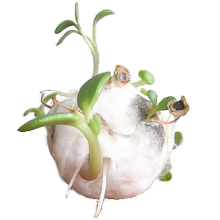
My garden has always inspired me. I learn a lot about composing art from my garden - the colors, textures, compositions. This year, I started a new line of paper that has perennial seeds embedded into the paper. The idea is to keep recycling. Once one of my cards has been received, it can be planted to grow a wildflower garden and start the process of growing and recycling all over again.

http://etsygreetings.blogspot.com/2009/11/friday-feature-pulp-art.html


Tuesday, July 19, 2016

Oh yes!


Love the name of this treasury. Thanks to Kelly for including my plantable paper hearts in peach!


Tuesday, July 5, 2016

Etsy Alternatives


Etsy has been having problems with processing payments the past couple of days because of a third-party company's technical issues. As always, there are disgruntled sellers talking about leaving Etsy. I am quite loyal to Etsy and don't plan on leaving, especially since I actually can't handle more business. But for those who do want to consider other alternatives, if only just to diversify, here is a breakdown of some great online options, courtesy of https://blog.scottsmarketplace.com/etsy-alternatives/ (Handmade on Amazon has not been included in this list since it is a newer opportunity, but many Etsy sellers have had great success there, as well.)

The following Etsy alternatives have been broken down by how much they cost to join (if anything), listing fees, what you’re allowed to sell, and what you get for giving them your business.

Scott’s Marketplace, an online marketplace dedicated to local business owners in the United States, is number one in my book. And I’m not just biased, I swear. You get a professional online store for free – which means it’s a low-risk option for small business owners.
Monthly fee: None
Listing fees: None
Unlimited products: Yes
Transaction fees: 4.99%
Highlights: Free marketing support, including advertisement, retargeting, social media, email marketing, blogging, and site-wide promotions.
Allows chains/large retailers: No – only local business owners can sell their products
Products allowed: Handmade and vintage welcome, but not restricted
Features: Search engine optimized, Discount-code enabled, Inventory management, Ability to add multiple product images

Shopify allows you to choose from 100 different themes and gives you a professional-looking online store, but comes with a hefty monthly fee.
Monthly fee: $29-179
Listing fees: None
Unlimited products: Yes
Transaction fees: Starts at 2.9% + 30 cents and goes up from there
Products allowed: Handmade and vintage welcome, but not restricted
Highlights: Customization of your store
Features: Search engine optimized, Discount-code enabled, Inventory management, Ability to add multiple product images, Analytics dashboard

Bonanza allows chain stores and international sellers to sell their products, and provides a free trial. They take a commission based on the price of the item you sell.
Monthly fee: $12-250
Listing fee: None
Unlimited products: No, limit depending on membership type
Transaction fees: 3.5%
Products allowed: Handmade and vintage welcome, but not restricted
Highlights: Customization of your store
Features: Inventory management, Ability to add multiple product images

Cargoh
To sell on Cargoh, you must first submit an application and wait for approval. Their transaction fees are also higher than most, coming in at 8%, but their site is curated and attractive.
Monthly fee: None
Listing fees: None
Unlimited products: Yes
Transaction fees: 8% of sales.
Products allowed: Only handmade sellers, artists, and designers can sell their products, if chosen by the marketplace
Highlights: Curated marketplace
Features: Inventory management, Ability to add multiple product images, Analytics dashboard

Artfire allows international sellers and has a similar Etsy-esque feel. You can sell everything from art to art supplies here.
Monthly fee: $20 per month
Listing fees: None
Unlimited products: No, limit to 1,000 listings
Transaction fee: None
Commission fee: 3-9% of sales
Products allowed: Handmade, vintage, craft supplies, and design.
Highlights: Customization templates
Features: Inventory management, Ability to add multiple product images, Analytics dashboard

Keep in mind, no matter where you choose – or what features your online store comes with – you have to do your part when it comes to marketing or you won’t see the sales you desire.